mmmarcus
Articles & programsMeditationsQuotationsConceptsAuthorsBooks (public domain)TimelineMapQuizzesKey learningsBooks (for reference)About
Changer le thème
FrançaisEnglish

hello@mmmarcus.com|@mmmarcus|2026

Back to authors
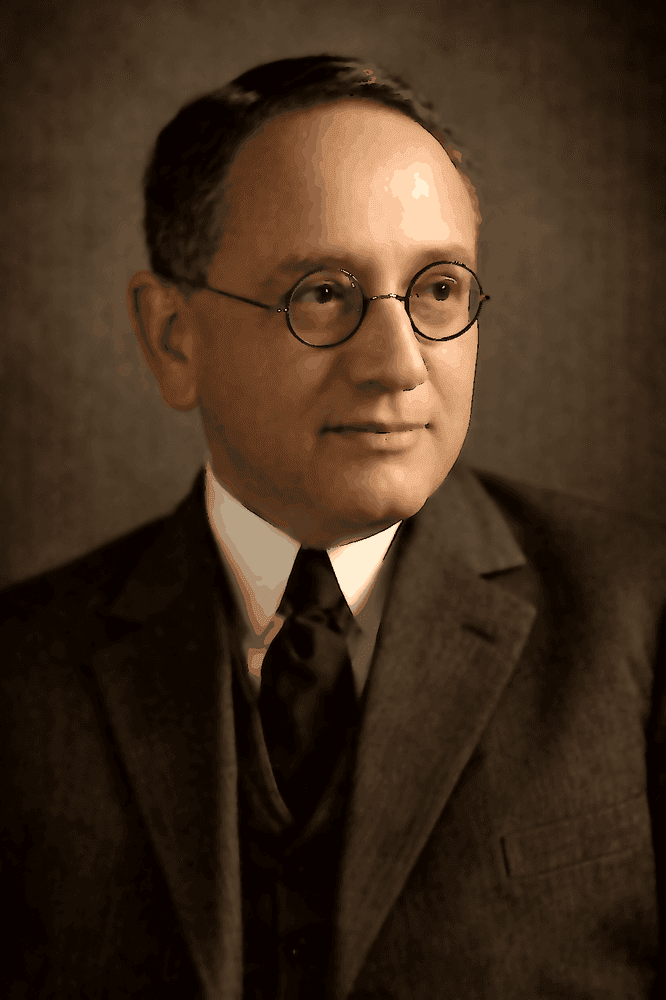
George Pólya

George Pólya

Mathematic
George Pólya (1887–1985) was a Hungarian-born American mathematician best known for his work on problem solving and the teaching of mathematics. Educated in Central Europe and later a long-time professor in the United States, particularly at Stanford University, Pólya focused less on mathematics as a formal system and more on the mental processes involved in thinking and discovery. His most famous book, How to Solve It, had a lasting impact on mathematics education by emphasizing heuristics, intuition, analogy, and general strategies rather than rote application of formulas. Pólya showed that thinking is an active process of exploration, conjecture, testing, and revision, and that these intellectual habits apply far beyond mathematics. His legacy extends into pedagogy, cognitive psychology, and broader reflections on learning and reasoning.

Thoughts (1)

←Previous
|
→Next
|
ESCBack
Steady flow and Heraclitus

Steady flow and Heraclitus

If the flow is steady, the field velocity vectors and the system of streamlines remain unaffected by the progress of time. Looking at the vector field and its streamlines we do not notice any change. Yet if we could distinguish the different particles of fluid from each other, we could observe incessant change...
We have here two aspects of a steady flow, one of unchanging persistence, the other of incessant change. ...Heraclitus was called the "Dark Philosopher"; his views of human affairs were sombre and his sayings obscure. ...
"You cannot look twice at the same river; for fresh waters are ever flowing in."
"We look and do not look at the same rivers; we are, and we are not."
What is the intended meaning of these sentences? I do not venture to find out. Yet I think that the originator of these sentences came pretty close to formulating the concept "steady flow of a fluid."

George Pólya

Mathematical Methods in Science (1977)