Back to authors

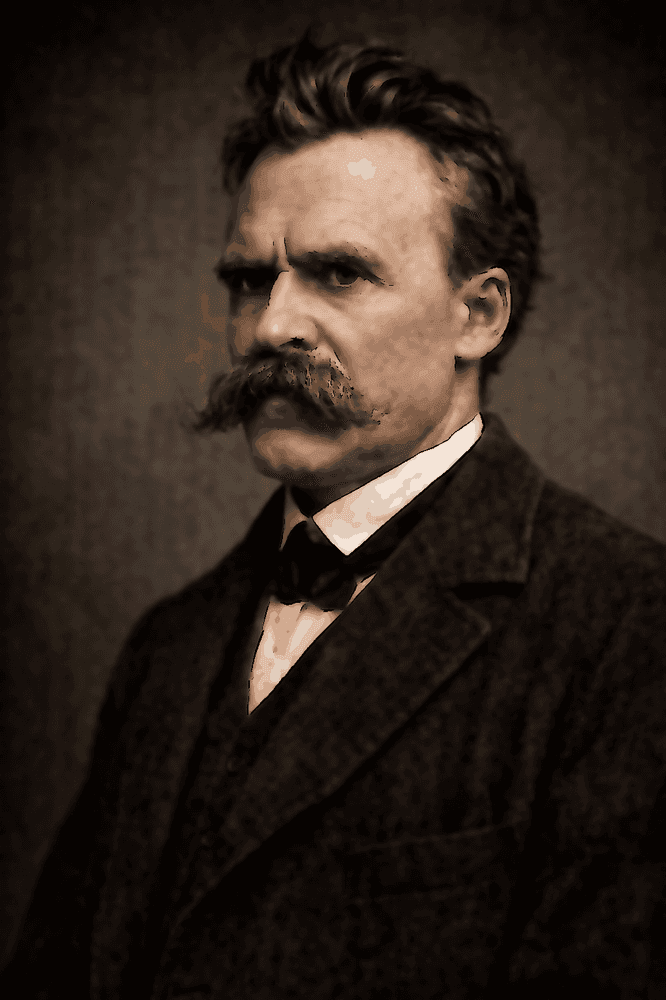
Friedrich Nietzsche
Philosophy
Friedrich Nietzsche (1844–1900) was a German philosopher, philologist, and cultural critic whose work profoundly reshaped modern thought.
Nietzsche began his career as a classical philologist, appointed professor at Basel at the age of twenty-four. He soon broke with academic conventions to pursue a radically independent philosophy, writing in an aphoristic, poetic, and often provocative style. His major works include Thus Spoke Zarathustra, Beyond Good and Evil, On the Genealogy of Morals, and The Gay Science.
At the center of Nietzsche’s philosophy is a critique of traditional morality, especially Christian and metaphysical systems that, in his view, deny life by condemning strength, creativity, and becoming. He famously declared the “death of God,” not as a theological claim, but as a diagnosis of Western culture: the collapse of absolute values that once gave meaning and orientation.
Nietzsche develops key concepts such as the Will to Power, the Übermensch (overman), eternal recurrence, and self-overcoming. Together, they express a vision of life as creation, interpretation, and continual transformation rather than obedience to fixed truths or moral laws.
Often misunderstood as a thinker of domination or nihilism, Nietzsche in fact sought a revaluation of values: a way for human beings to affirm life, suffering, and contradiction without retreating into resentment or false consolation. His philosophy is not a system, but an invitation to think, to experiment, and to take responsibility for one’s values.
Although his final years were marked by mental collapse and silence, Nietzsche’s influence has been immense—shaping existentialism, psychoanalysis, post-structuralism, literature, and contemporary critiques of morality and culture.
←Previous
→Next
ESCBack