Back to authors

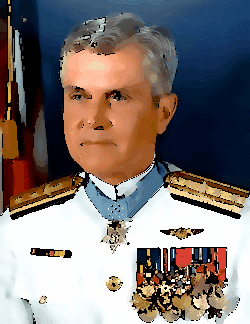
James Bond Stockdale
StoicismMilitary
James Bond Stockdale (1923–2005) was a United States Navy admiral, fighter pilot, and one of the most striking modern embodiments of Stoic philosophy in action.
Shot down over North Vietnam in 1965, Stockdale spent more than seven years as a prisoner of war, much of that time in solitary confinement. As the senior-ranking officer among the prisoners, he endured severe torture while organizing covert resistance, enforcing a code of conduct, and protecting fellow captives—often at great personal cost. For his leadership and courage, he was awarded the Medal of Honor.
What makes Stockdale especially distinctive is that he consciously relied on Stoicism—particularly the teachings of Epictetus—during captivity. Having studied Epictetus shortly before deployment, he later said that the Stoics gave him “a language for suffering” and a framework to preserve inner freedom when all external freedom was stripped away. Control of judgment, assent, intention, and moral purpose became his lifeline.
After the war, Stockdale continued to write and speak about Stoic philosophy, ethics, and character, serving as president of the Naval War College and later as a public intellectual. His life is often cited as a living demonstration of core Stoic principles: prohairesis, assent, endurance, dignity under adversity, and acting rightly regardless of outcome.
Stockdale’s legacy is not that Stoicism makes suffering disappear, but that it shows how a human being can remain free, coherent, and honorable even in the most extreme conditions.
←Previous
→Next
ESCBack