Back to authors

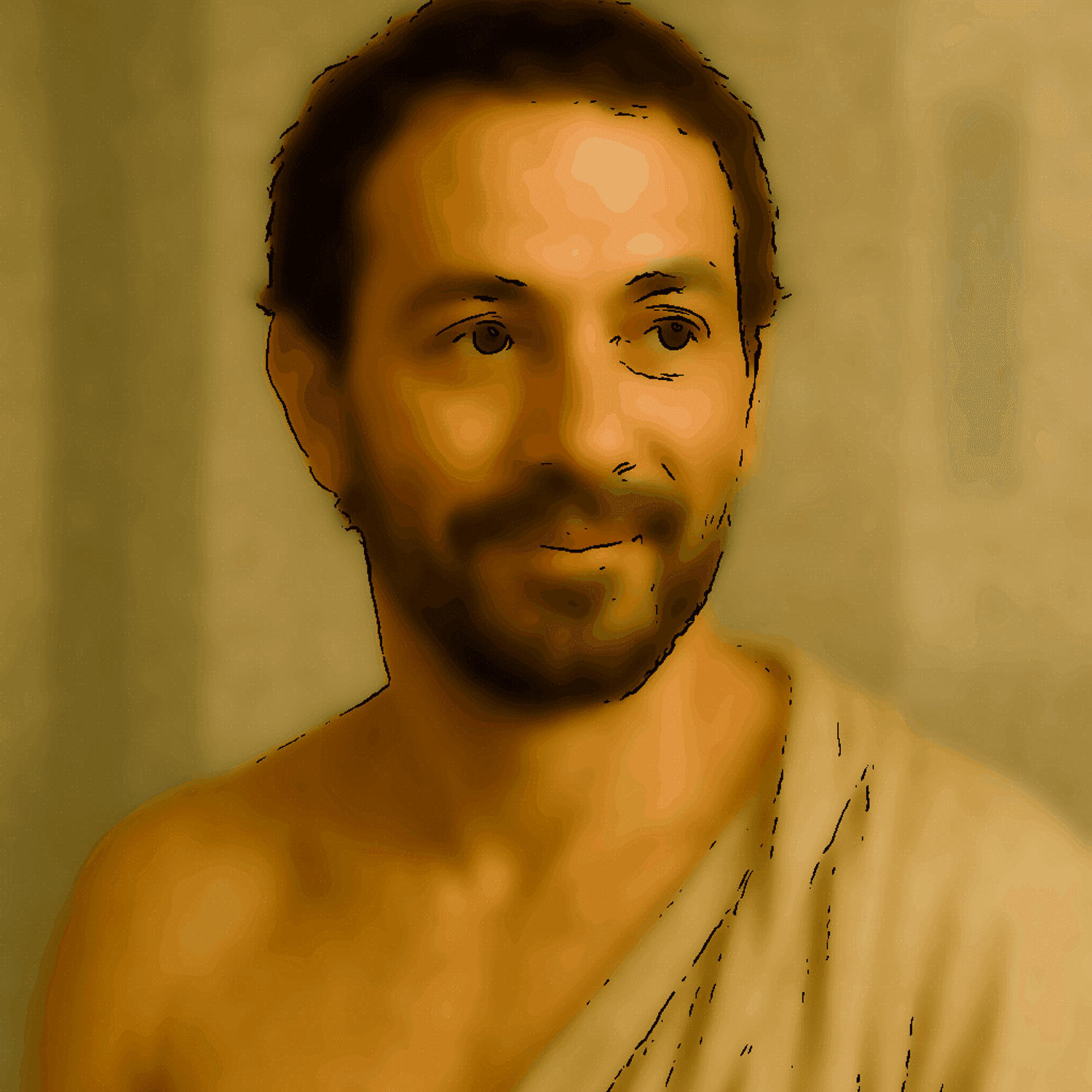
Socrates
470 BCE
Socrates was one of the most influential philosophers of ancient Greece. Born in Athens around 470 BCE, he is widely regarded as one of the founders of Western philosophy. The son of a sculptor (Sophroniscus) and a midwife (Phaenarete), he spent most of his life in Athens, apart from periods of military service. Unlike many other thinkers of his time, Socrates wrote nothing. What we know about him comes mainly from his students, especially Plato and Xenophon, as well as from the satirical comedy of Aristophanes. Socrates taught in the streets and public squares of Athens. He developed a method of inquiry known as the Socratic method, or maieutic, which involved asking probing questions to challenge assumptions and guide others toward deeper understanding. He famously claimed that his wisdom consisted in recognizing his own ignorance — often paraphrased as: “I know that I know nothing.”
His philosophy focused primarily on ethics, virtue, justice, and self-knowledge. He believed that wrongdoing stemmed from ignorance and that the pursuit of truth was essential to living a good life. In 399 BCE, Socrates was charged with corrupting the youth and introducing new gods. After a public trial, he was sentenced to death. He refused the opportunity to escape and calmly accepted his fate, drinking a cup of hemlock. His death made him a lasting symbol of intellectual integrity and moral courage.
←Previous
→Next
ESCBack