Back to authors

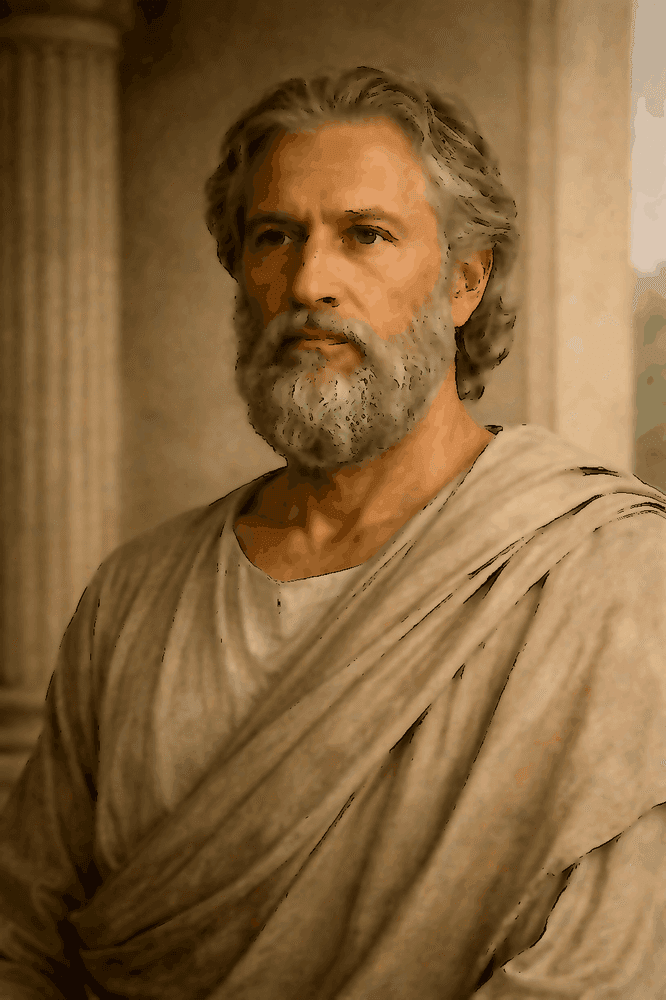
Plato
Platonic idealism
Plato (c. 428–348 BCE) was one of the founders of Western philosophy and one of the most influential thinkers of antiquity. A disciple of Socrates and the founder of the Academy in Athens, he developed a largely dialogical body of work in which the search for truth unfolds through debate and critical examination of opinions. His philosophy is structured around major doctrines—the Theory of Forms, the immortality of the soul, recollection, and the hierarchy of knowledge—and places ethics and politics at its core. For Plato, philosophy is a process of conversion of the soul: it seeks to turn the mind away from sensible appearances and toward the intelligible realm, the Good, and justice, as the foundation of a rightly ordered individual and collective life.
←Previous
→Next
ESCBack