Back to articles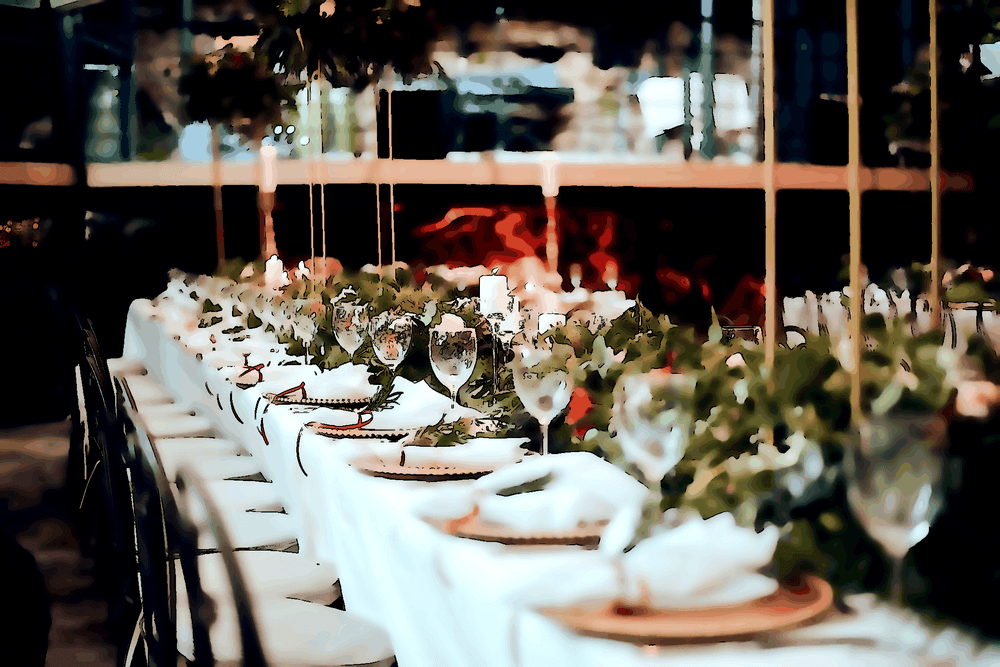
55 / 80
4 min.
Stoicism: foundations
Think of life as a banquet
<p>You’re not the host of the feast. You’re a guest. Receive what’s offered, let pass what isn’t. </p>
<p>You’re not the host of the feast. You’re a guest. Receive what’s offered, let pass what isn’t. </p>
Imagine a
banquet—a true feast, vibrant, generous, unpredictable, like those once
celebrated in ancient Rome.
Picture it: oil lamps casting a soft glow, conversations echoing beneath marble
columns, servants weaving through the crowd with trays of figs, warm bread, and
spiced wine. You’re there, dressed in a toga, seated among the other guests. The
dishes make their rounds, carried by the rhythm of hands and glances. Sometimes,
they reach you. Sometimes, they don’t. And you, where are you seated?
Near the center, or on the edge of the circle? At what place in the banquet of
life? And above all: how do you respond when the dishes pass from hand to hand,
when they brush past you without stopping, or when they linger in front of you?
“Remember
that you ought to behave in life as you would at a banquet.
As something is being passed around it comes to you;
stretch out your hand and take a portion of it politely.
It passes on;
do not detain it.
Or it has not come to you yet;
do not project your desire to meet it, but wait until it comes in front of you.
So act toward children, so toward a wife, so toward office, so toward wealth;
and then some day you will be worthy of the banquets of the gods. But if you do
not take these things even when they are set before you, but despise them, then
you will not only share the banquet of the gods, but share also their rule.”
1
Epictetus offers us this image like a mirror. He isn’t talking about food, of course, but about everything life places before our eyes: opportunities, pleasures, honors, relationships, signs of esteem… Everything we long for, everything we believe we deserve.
A dish is
placed before you? Take it with simplicity.
It passes you by? Don’t reach out to hold it back.
It hasn’t come yet? Don’t stretch your desire in vain.
Wait. With patience, with grace.
Why is this seemingly simple advice so powerful? Because it turns one of our
deepest reflexes on its head: the belief that everything we desire is owed to
us. That if something pleases us, we should have it, and if we don’t, we’ve
been unfairly deprived.
Stoic
wisdom begins here: in the realization that you are not the master of the
banquet—you don’t set the menu, the pace, or the distribution. You are a guest,
not the host. And you must learn to act accordingly. But then you might ask:
Should we accept everything passively? No. You can reach out when a dish is
passed, you can even act to move a little closer to it. But you must not cling
to it. And above all, you must understand the cost of what you desire. That’s
where the second quote from Epictetus comes in—found later in the Handbook:
You have not been invited to somebody's dinner-party? Of course not; for you didn't give the host the price at which he sells his dinner. He sells it for praise; he sells it for personal attention. Give him the price, then, for which it is sold, if it is to your interest. But if you wish both not to give up the one and yet to get the other, you are insatiable and a simpleton.” 2
Someone
doesn’t invite you to a banquet? It’s because you haven’t paid the price.
A harsh, but necessary lesson. In the social world, every favor, every access,
every bit of recognition comes at a cost: flattery, pleasing others, making
concessions. And you? Are you willing to pay that price? Or do you want the
reward without the exchange? If you refuse to give what the other person
demands — their price, as Epictetus puts it — then don’t grow bitter when they
offer you nothing in return. It isn’t injustice. It’s a choice. Your
choice. And sometimes, it’s a noble one: refusing to flatter. Refusing to play
the game.
So {{username}}, the next time an opportunity slips away, when someone doesn’t give you what you were hoping for, when recognition is slow to arrive… pause. Ask yourself: Did I act like a guest worthy of the gods? Did I truly want the dish—or just the prestige of being served first? Did I really want to be part of the banquet, or simply to be seen at the table?
True
freedom isn’t about getting everything you desire.
It’s about desiring what is right,
at the right moment,
in the right way.