When Stoicism teaches you to "distinguish what depends on you from what does not depend on you," it suggests an exercise in demarcation.
You need to know how to separate yourself from the rest, from the outside world.
The word “demarcation” is very important here {{username}} because it's very explicit.
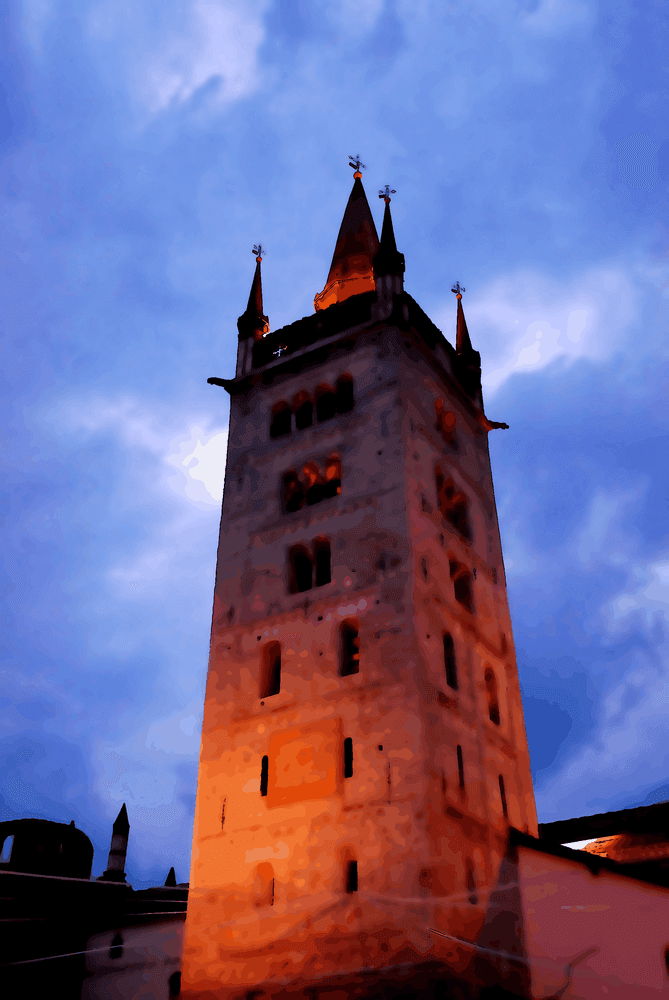
Imagine a fortress, your own, the fortress of your thoughts, your own "inner fortress" 1 , demarcated by a border behind which the outside world rattles.
Imagine this fortress, this citadel.
A citadel like the ones you see in fantasy series or movies with scenes from the Middle Ages. You see a fortified part of a city surrounded by bastions and dungeons that would protect the inhabitants in the event of an invasion from outside. From here, the command centre can continue to operate despite the pressure of an attacker.
_/\ This citadel is your guiding principle 2 from which you determine your strategy;
_/\\ these bastions that protect the city are the tools you use against everything outside yourself;
_/\\\ these intruders, all these external things that attack your inner peace: [1] others, [2] the past and the future, [3] involuntary emotions, [4] the flow of events.
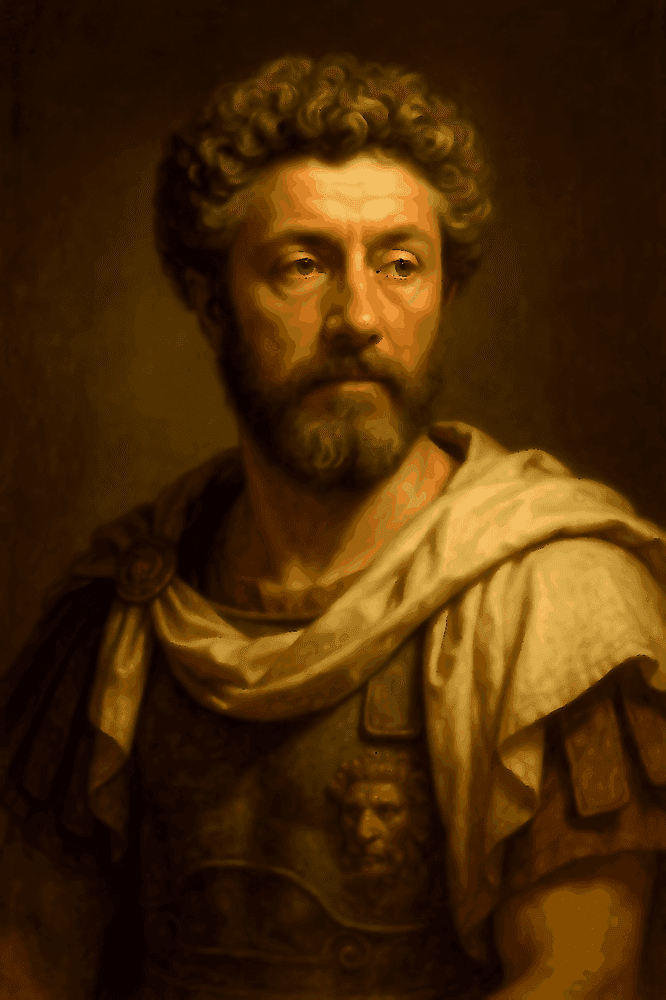
This outer world I'm talking about here, these four externals are described by Marcus Aurelius in such way:
“So, if you separate from yourself, namely from your mind,
[1] all that others do or say,
[2] all that you yourself did or said, all that troubles you in the future,
[3] all that as part of the bodily envelope or natural spirit attaches to you without your will,
[4] and all that the external circumfluent vortex whirls round,
so that your mind power, freed from the chain of necessity, lives purified and released by itself—doing what is just, willing what comes to pass, and speaking what is true; if you separate, I say, from this governing self what is attached to it by sensibility, and what of time is hereafter or has gone by, and make yourself like the sphere of Empedocles, rounded, rejoicing in the solitude which is about it.” 3
In the following four entries, you'll examine in details each of these circles, as Pierre Hadot calls them.
Try to memorise what is foreign to you:
[1] the others,
[2] the past and the future,
[3] involuntary emotions,
[4] the flow of events.
See you soon {{username}}.