
You must act sparingly.
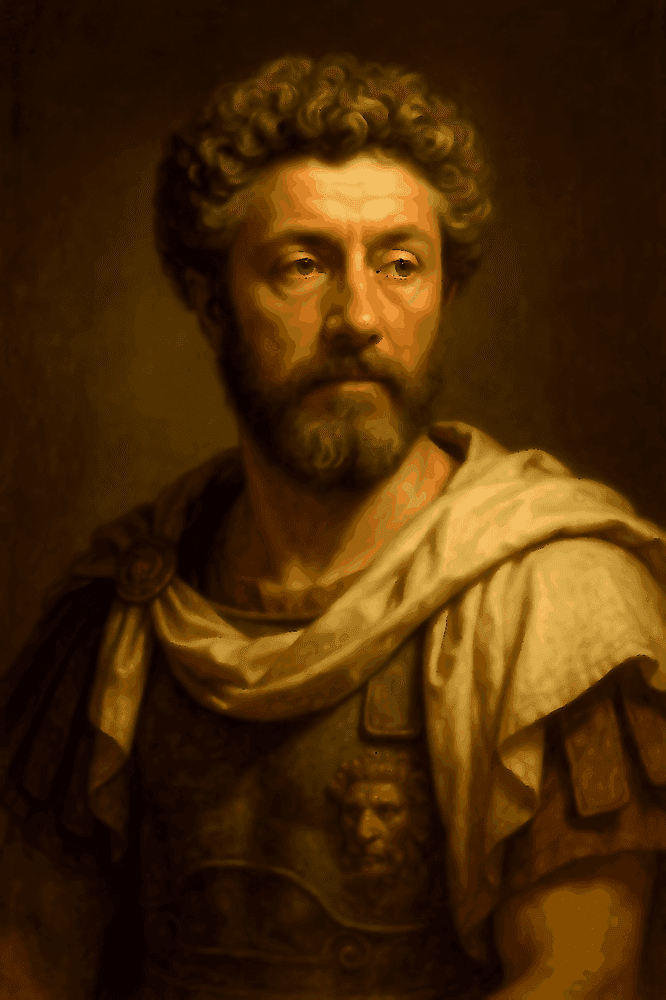
Marcus Aurelius quotes Democritus somewhere in his work: “Do few things, if you would enjoy tranquility.”
And he follows:
“May it not be better to do the necessary things and what the reason of a creature intended by Nature to be social prescribes, and as that reason prescribes?
For this brings not only the tranquility from doing right but also from doing few things. For if one removes most of what we say and do as unnecessary, he will have more leisure and less interruption. Wherefore on each occasion he should remind himself: 'Is this not one of the necessary things?'
And he should remove
not actions merely that are unnecessary, but imaginations also, for in this way superfluous actions too will not follow in their train.” 1
To act sparingly
means to have the courage not to engage in seemingly pleasurable but in reality meaningless pursuits that don't serve your main purpose: that of working for your own development or the development of society;
it means recognizing that life is short, that death may be just around the corner, and that you must take things seriously. Because your time is limited, these things have an unsurpassed value.
For time is the highest good.
The one thing you can't buy, the one thing you can't make up for. Even a rainy day can be replaced by a sunny day the next day. You can never get the time back.
To act sparingly
also means thinking sparingly.
Thinking about trivial things, such as what other people think of you, is a waste of your time on earth.
In everything you undertake {{username}}, you must be fully committed and serious about your efforts.
One of the most quoted excerpt from the Meditations explains:
“The soul of a man does violence to itself, first and foremost when failing to direct any act or impulse of its own upon a mark, it behaves in any matter without a plan or conscious purpose, whereas even the smallest act ought to have a reference to the end.” 2
When you're with friends, don't think about work.
When you're at work, don't think about your friends.
It's not just about living in the present moment, which for the Stoics is the only moment there is, but also about fully engaging in what you're doing and considering why you're doing it and what purpose it serves. Look at everything around you. Aren't the most beautiful movies the most remarquable because the directors and actors have dedicated their entire being to a common goal for a certain period of their lives? Isn't that also true of any creative work? When you prepare a dish at home to delight your partner, it follows the same logic. From choosing the ingredients to serving the finished dish on the plate, everything has been done conscientiously with a specific goal in mind: to give your partner a moment of pleasure.
Every action you don't take seriously is time you'll never get back. It's the clock of life ticking. If you waste your time doing things half-heartedly, you're wasting a piece of your life.
So act with all your heart and soul.
Let the fruits of your actions be the best you can give to the world.
That will give you even greater satisfaction.
Here is an extended passage from Epictetus' Enchiridion (Handbook). I’m sharing it with you in its entirety, leaving it for you to reflect on:
“In each separate thing that you do, consider the matters which come first and those which follow after,
and only then approach the thing itself.
Otherwise, at the start you will come to it enthusiastically, because you have never reflected upon any of the subsequent steps, but later on, when some difficulties appear, you will give up disgracefully.
Do you wish to win an Olympic victory?
So do I, by the gods! for it is a fine thing.
But consider the matters which come before that, and those which follow after, and only when you have done that, put your hand to the task. You have to submit to discipline, follow a strict diet, give up sweet cakes, train under compulsion, at a fixed hour, in heat or in cold; you must not drink cold water, nor wine just whenever you feel like it; you must have turned yourself over to your trainer precisely as you would to a physician. Then when the contest comes on, you have to ‘dig in’ beside your opponent, and sometimes dislocate your wrist, sprain your ankle, swallow quantities of sand, sometimes take a scourging, and along with all that get beaten.
After you have considered all these points,
go on into the games,
if you still wish to do so; otherwise, you will be turning back like children. Sometimes they play wrestlers, again gladiators, again they blow trumpets, and then act a play. So you too are now an athlete, now a gladiator, then a rhetorician, then a philosopher, yet with your whole soul nothing; but like an ape you imitate whatever you see, and one thing after another strikes your fancy. For you have never gone out after anything with circumspection, nor after you had examined it all over, but you act at haphazard and half-heartedly.
In the same way, when some people have seen a philosopher and have heard someone speaking like Euphrates […] , they wish to be philosophers themselves. Man, consider first the nature of the business, and then learn your own natural ability, if you are able to bear it. Do you wish to be a contender in the pentathlon, or a wrestler? Look to your arms, your thighs, see what your loins are like. For one man has a natural talent for one thing, another for another. Do you suppose that you can eat in the same fashion, drink in the same fashion, give way to impulse and to irritation, just as you do now? You must keep vigils, work hard, abandon your own people, be despised by a paltry slave, be laughed to scorn by those who meet you, in everything get the worst of it, in honor, in office, in court, in every paltry affair. Look these drawbacks over carefully, if you are willing at the price of these things to secure tranquility, freedom and calm.
Otherwise, do not approach philosophy; don't act like a child—now a philosopher, later on a tax-gatherer, then a rhetorician, then a procurator of Caesar. These things do not go together. You must be one person, either good or bad; you must labor to improve either your own governing principle or externals; you must work hard either on the inner man, or on things outside; that is, play either the role of a philosopher or else that of a layman.” 3
Have a great day my friend.