
The first great teaching was: "You can't control events, but you can control your reaction to them."
The second great teaching was: "Learn to distinguish between what depends on you and what does not depend on you."
The third great Stoic teaching is: “You must accept that change is a constant of existence.”
This teaching is also found in Buddhist and Taoist scriptures. An age-old wisdom taught from Europe to Asia and that we tend to forget. But accepting the fact that the world is constantly changing and integrating it deeply into your thinking means, simply put, that you need to stop asking yourself too many questions. The questions that haunt you: Why is this happening to me, why didn't I, why am I in this situation today. You know, just like I do, the lamentations that torment us all too often.
You complain about what you don't have today, but yesterday, didn't you have it?
You complain that you aren't happy today, but yesterday, weren't you happy?
And tomorrow, you will be again happy.
Cycles only repeat themselves.
Everything changes.
Constantly.
Heraclitus, a pre-Socratic philosopher from the 5th century B.C., would have said, “Nothing is permanent, except change.”
Change is a constant in life.
Things are constantly evolving,
transforming
and changing.
Circumstances around you never stand still.
Observe nature.
It takes 365.25 days for the earth to complete its cycle around the sun and then start all over again. In between there is winter, summer, rainy season, day and night, the northern lights, animals hibernating and moving from one land to another, comets crossing the cosmos, the body ageing.
Nature does not resist.Learn, like nature, to adapt to change instead of resisting the inevitable.
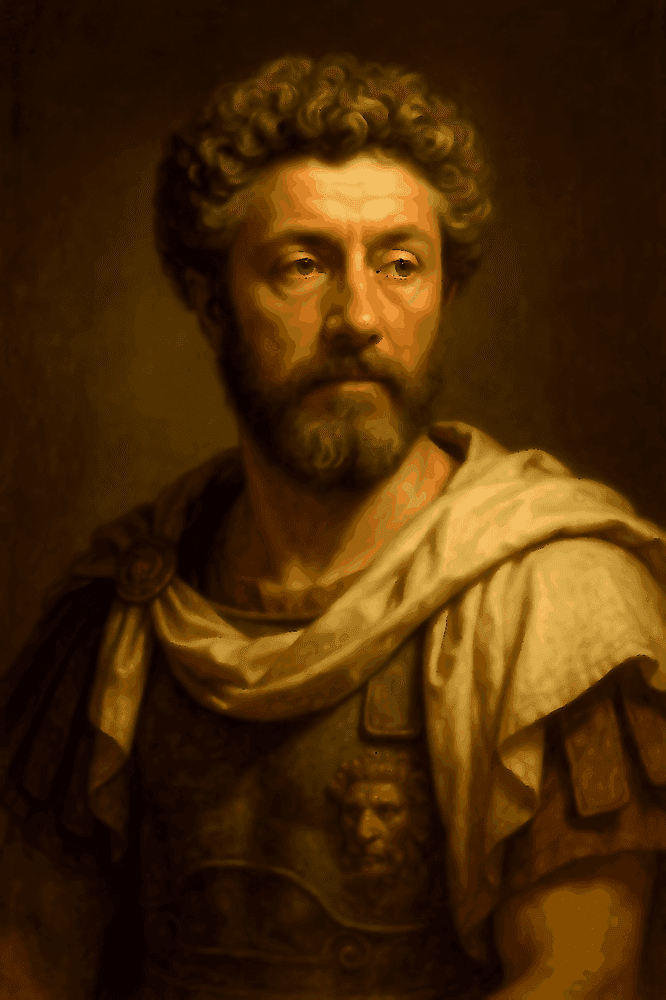
Marcus Aurelius:
“Every natural thing is satisfied when it fares well when it gives its assent to nothing false or obscure in its imaginations,
directs its impulses only to social ends,
desires and avoids only what is in our power,
and welcomes all that is assigned by Universal Nature..” 1
Marcus Aurelius again:
“[the event] was for you it came to pass, for you it was ordered and to you it was related, a thread of destiny stretching back to the most ancient causes.” 2
Take a moment and ask yourself:
What about your inner attitude toward these changes?
Do you have the openness and willingness to let go of what is beyond your control?
Are you ready to adjust your expectations and plans to these new realities?
Don't cling to obsolete patterns from the past.
{{username}}, 1/notice, 2/accept, 3/adapt.
Instead of clinging, be the man or woman who walks down the street with head held high and proud, serene
because no change touches their soul,
confident because they aren’t worried about the future. They know that everything follows an order willed by a higher logic, and her best, they have done.
Don't think of the painful event that has tormented you, but put yourself in a position to greet the unknown as if you were bringing your best friend home, filled with simple, sincere joy; for what happens to you today may well be the necessary step towards the fulfilment of your destiny. The Stoics recommend that you fall in love with your destiny.
When you accept this God-given change as an inevitable part of life, you free yourself from preconceived ideals and unrealistic fantasies; you free yourself from fears and burdens that manifest in your body as resistance to change, and instead adopt an open, positive attitude that trusts in your own abilities.
And so ends this series of 3 basic principles: You can't control what happens to you, some things depend on you, others don't, and change is permanent.