
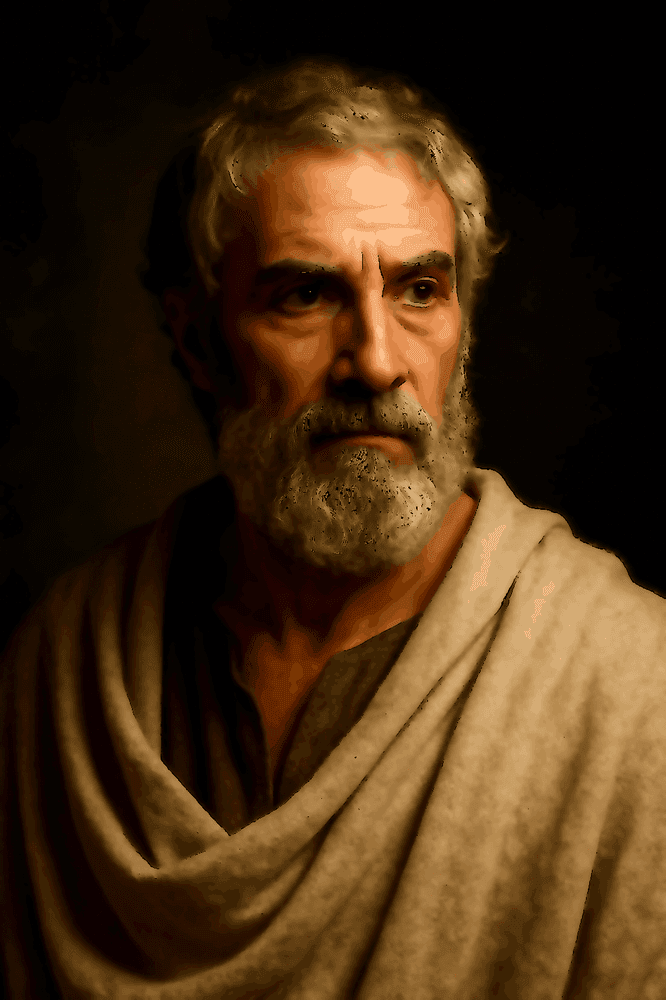
The second lesson of Stoicism, which is closely related to the first lesson we saw, "You cannot control everything that happens to you, but you can control how you respond to it," is to discern what depends on you and what does not.
Life is interconnected to all things, as I told you in a previous text.
In that grand ensemble {{username}},
there are things that you have direct control over, and other things that are beyond your control.
Here are the things you can control:
Your thoughts,
Your actions,
Your emotional reactions,
Your decisions,
Your attitude toward circumstances.
These are the things you cannot control:
The actions of others,
The thoughts of other people,
The feelings of other people,
The unpredictability of the world around you.
The original text with which begins the famous Enchiridion (Handbook) of Epictetus, proclaims one of the most important fundamental principles of Stoicism:
“Some things are under our control, while others are not under our control. Under our control are conception, choice, desire, aversion, and, in a word, everything that is our own doing; not under our control are our body, our property, reputation, office, and, in a word, everything that is not our own doing.
The things under our control are by nature free, unhindered, and unimpeded; while the things not under our control are weak, servile, subject to hindrance, and not our own.
Remember, therefore, that if what is naturally slavish you think to be free, and what is not your own to be your own, you will be hampered, will grieve, will be in turmoil, and will blame both gods and men; while if you think only what is your own to be your own, and what is not your own to be, as it really is, not your own, then no one will ever be able to exert compulsion upon you, no one will hinder you, you will blame no one, will find fault with no one, will do absolutely nothing against your will, you will have no personal enemy, no one will harm you, for neither is there any harm that can touch you.” 1
You are free to act or think as you will.
But you're subject to the whims of fate.
Learn to distinguish clearly between these two areas:
that over which **you have ** control,
and that over which **you have no** control;
what **depends** on you
and what **doesn't depend** on you.
What doesn't depend on you must be considered indifferent 2: neither good nor bad, for it's the will of Universal Nature /Reason (fate) that expresses itself.
Focus your energy and attention on what you can directly influence. Conversely, get rid of the thoughts that focus on what you cannot influence, so that you don't waste your reserves unnecessarily.
Concretely,
this means directing your thoughts to actions that belong to you
and of which you're the architect (your work, your sport, your children, your lifestyle, your thoughts, your health, your projects, the way you spend every hour of your life), and not to the outside (the bad weather that thwarts your projects, a call from someone you hope for but never receive, etc.).
If you learn to make this {{username}} distinction, you'll discover a priceless inner freedom.
You'll develop your true strength. A strength that comes from your judgement, determination, and resilience in the face of adversity.
**Free**.
That's the most important word here.
There is an interesting theory put forward by Eckhart Tolle in his bestseller The Power of Now: A Guide to Spiritual Enlightenment 3.
According to Tolle, people aren't free because
they tend to identify strongly with their mind, which constantly produces negative thoughts, worries, regrets about the past or fears about the future. He argues that this identification with the mind creates a kind of compulsion to entertain negative emotions; that the human mind tends to get lost in incessant thoughts that often focus on problems, conflicts, fears, etc.; and that over time this becomes an unconscious habit; but most importantly, an **identification with a state of mind** that perpetuates the cycle of negative emotions.
In other words, Tolle explains that people often **clinge** to their negative emotions because they identify with their mind.4
So you'd be complacent about your unhappiness because you've been lost in your thoughts for so long that they comfort you every time you find them?
Every theory has its counter-theory, so I'll leave you with this idea to ponder. I'm not trying to lecture you on psychology, but it seems to me that understanding what's going on in our heads can help us interpret phenomena that escape us.
The key to liberation lies in understanding.
So perhaps take some time to reflect on this point.
In any case, Tolle's and my conclusions are identical: if you free yourself from the grip of these feelings, you free yourself.
That is the goal, after all: to be free from evil,
free from pain.
You'll be free from worries, fears, doubts and anxieties because you have learned to control your soul.
You'll be free from the burden of having to control every aspect of your life, and you'll be able to face uncertainty with serenity.
You'll focus on what really matters: what you can control,
& free your mind from what you cannot control.