Back to articles
66 / 80
3 min.
You may have heard it said, {{username}}, that Stoicism is just a form of fatalism. A cold, detached philosophy that urges you to give up your own will. An invitation to withdraw, to remain passive, to accept everything that happens—even injustice—without protest.
This argument, though common, stems from a deep misunderstanding of the Stoic system. It confuses ideas that seem similar at first glance—fatalism, determinism, resignation, acceptance—but are fundamentally different in structure and meaning.
You may have noticed {{username}} that many people call Stoicism "fatalistic" and say that it promotes passivity and complacency.
This argument often reflects a fundamental lack of understanding of the philosophical system you are studying today.
Stoicism is a philosophy of right action, not non-action.
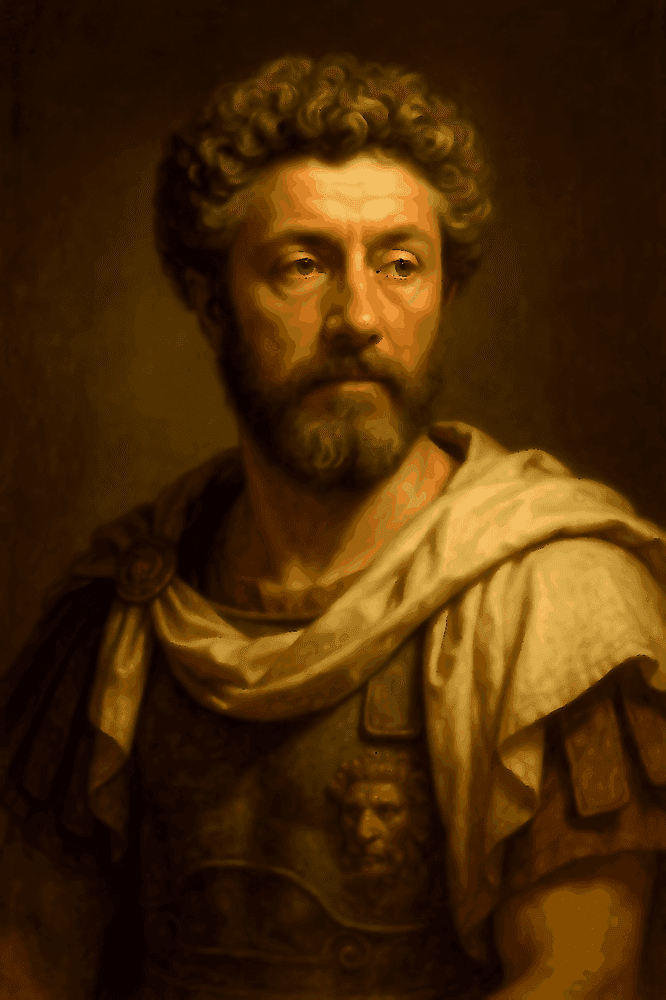
In one of the most famous passages from Meditations, Marcus Aurelius reminds us of the need to rise and act—even when we don’t feel like it:
“At dawn of day, when you dislike being called, have this thought ready: 'I am called to man's labour; why then do I make a difficulty if I am going out to do what I was born to do and what I was brought into the world for? Is it for this that I am fashioned, to lie in bedclothes and keep myself warm?'
— But this is more pleasant.
— Were you born then to please yourself; in fact, for feeling, not for action? Can't you see the plants, the birds, the ants, the spiders, the bees each doing his own work, helping for their part to adjust a world?” 1
Stoicism, then, calls us to take part in this order, to carry out our human roles, and to do so with full awareness, acknowledging limits, obstacles, and the possibility of failure. This isn’t resignation; it’s clarity. The well-known Stoic reserve clause 2 teaches us to frame our will not as a certainty, but as an intention, one that takes the world’s limits into account.
Because Stoic acceptance is often mistaken for resignation. But the two attitudes are nearly opposites.
Resignation is abdication. It’s the act of someone who no longer tries. Who sees everything as already decided, with nothing left to do or say. It’s a response of withdrawal.
The fatalist is the person who believes that his destiny is predetermined and that he has no will of his own; that everything has been predetermined by a higher will.
On the contrary, Stoicism is deterministic—a concept we’ll explore in detail in the next two texts.
Fatalism assumes that everything is predetermined, regardless of any intermediate causes. That no matter what we do, the outcome will be the same. But that is not the Stoic view. The Stoics are determinists: they believe that everything that happens follows from a chain of causes. And that includes human decisions. The future isn’t fixed despite our actions, it includes them, as causes among others. So you see, {{username}}:
Stoicism doesn’t tell us to give up. It tells us: look clearly, judge calmly, act wisely. It’s neither fatalism nor resignation. It’s a demanding commitment, to do everything you can, within your limits.
And to do it well.