Back to articles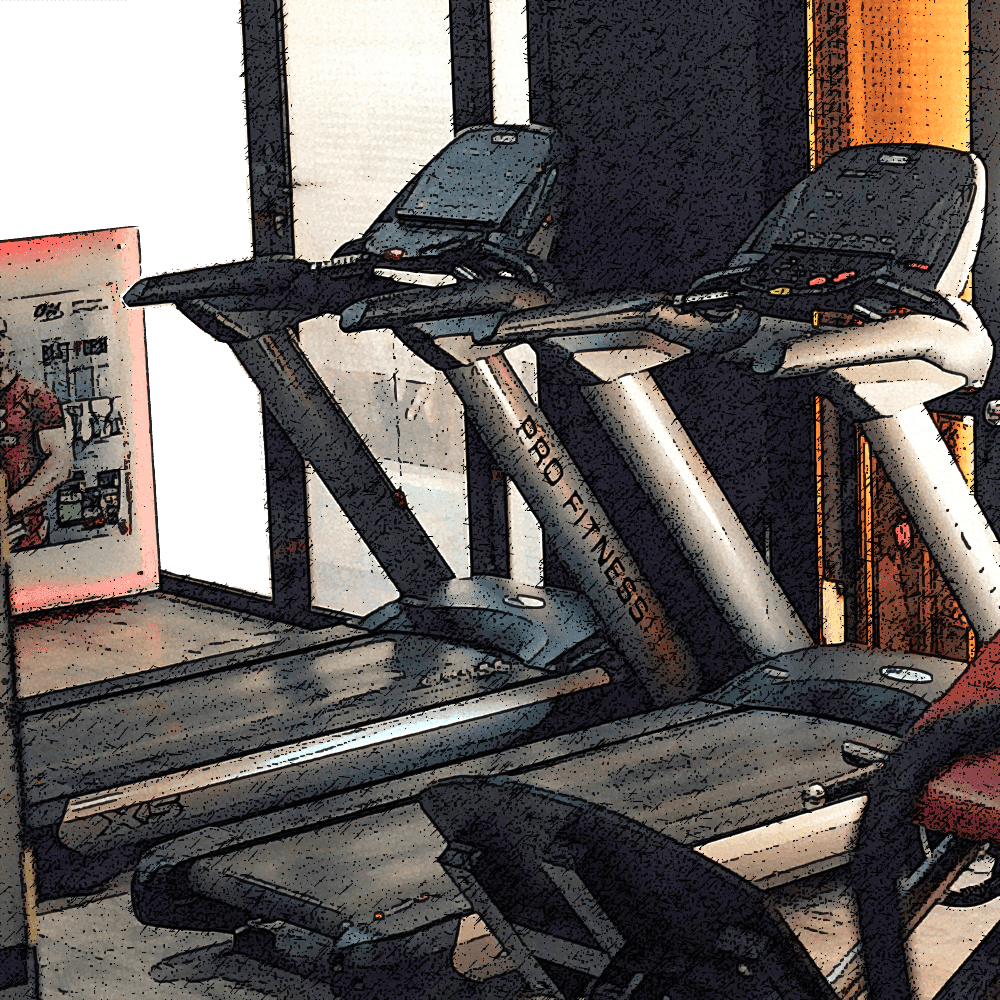
3 / 4
7
5 min.
Stoicism misconceptions
Hi {{username}},
I’m happy to be here with you today and hope you’re making the most of your day, perhaps even working on becoming the best version of yourself.
Just kidding.
That was a trap. I thought it would be a fitting way to introduce this article from the “Stoicism, Misconceptions” program. Did it work? :)
Today, I want to address one common misconception about Stoicism. Now, you might accuse me of falling into my own trap, because in some of my other texts, I do talk about “improving ourselves.” Though you’ll notice that I avoid the phrase “becoming the best version of yourself,” because I find it misleading and somewhat detached from the core values I try to embody and defend. This phrase implies that there’s some ultimate, polished version of you waiting at the end of a linear path, as if life were about sculpting yourself into a final, perfected form. A way to stand out in a society where constant comparison has become the norm.
But life isn’t a straight line toward an idealized self. And yet, modern self-help culture loves to tell you otherwise. “Become the best version of yourself” is everywhere—on motivational social media posts and wall posters, in self-improvement books, in morning routine guides. And along the way, some have started associating this idea with Stoicism, as if the philosophy were just another tool for optimization, another way to become more efficient, productive, and successful.
I’m here today to clarify why that’s not what Stoicism is about.
Stoicism is not about endless self-optimization.
It does not ask you to chase an idealized version of yourself,
constantly measuring your worth
against an unattainable standard.
In fact, this obsessive pursuit of “a better you” falls into a well-documented psychological trap: hedonic adaptation, also called the hedonic treadmill. The more you strive, the more the goalposts move. You reach one milestone, and immediately, a new one appears. Instead of finding peace, you find yourself on an endless treadmill, always needing more, always feeling that you’re not quite enough. What was once an inspiring goal turns into an exhausting cycle, feeding dissatisfaction rather than contentment.
Perhaps without labeling it at the time, the Stoics understood this danger. A danger that has only grown as society has shifted toward individualism and narcissism, fueled by relentless self-promotion, instant gratification, and the illusion that happiness lies in external validation rather than inner strength. And so, the Stoics did not preach self-improvement in the way we often see it today, focused on achievement, status, or external validation. Instead, they taught us to modify our inner discourse.
When you boil Stoic philosophy down to its core,
this is what it is:
transforming ourselves, aligning our thoughts with a certain view of the world, governed by reason.
This distinction is crucial.
The modern obsession with “becoming the best version of yourself” often implies a final destination, a perfected, polished self that, once attained, will bring fulfillment. But the Stoics rejected this illusion. There is no finished version of you waiting at the end of some self-improvement journey. There is only the present moment, the choices you make within it, and the discipline to align those choices with reason and virtue. For the Stoics, transformation isn’t about constructing an idealized self, it’s about stripping away illusion. It’s about recognizing that so much of what we chase : recognition, status, control over the uncontrollable is neither necessary nor truly ours to claim. Instead of sculpting ourselves into a perfect being, Stoicism urges us to refine our judgment, to question our impulses, to detach from what does not serve our character. It’s not a ladder to climb but a perspective to cultivate, a way of seeing the world that liberates rather than burdens.
The constant push to improve, to optimize, to be “better” suggests that what you are now is not enough. Stoicism, however, invites you to ask: Enough for what? Enough for external validation? Enough for society’s approval? Or enough to live a meaningful life, right here, with what you already possess?
The goal isn’t to "arrive" at some final version of yourself. It’s to live each day in accordance with reason, with integrity, with a deep understanding that what truly matters is not who you will become, but how you choose to think and act right now.
The task is not endless improvement but right action, not future perfection but present integrity.; the task is to embrace a guide for living well, in this moment,
with what you have,
as you are.