Back to articles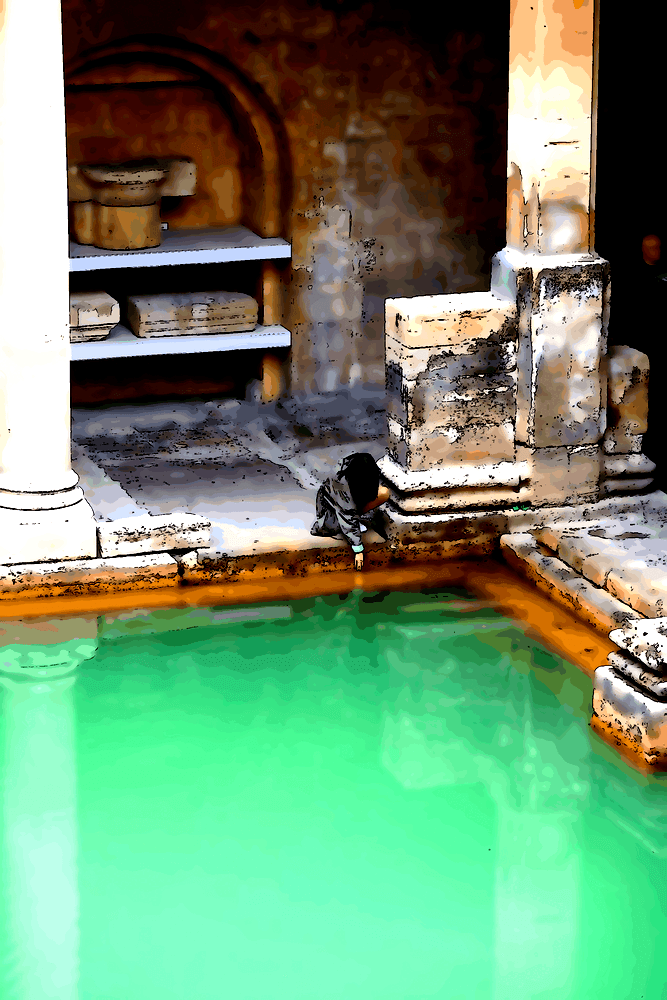
3 / 8
2 min.
Staying calm
Anticipate irritation
Anticipating small annoyances before they arise helps you protect your inner freedom and face whatever happens without losing your calm.
Anticipating small annoyances before they arise helps you protect your inner freedom and face whatever happens without losing your calm.
In ancient times, people bathed in the morning, in the evening, before meals, before making an important decision, sometimes even before the decision of life and death. The bath, the ancients said, strengthened the limbs and enlightened the mind. Most of the springs were dedicated to Hercules, the god of strength. In the baths, the different classes of ancient society mingled for a moment: the common people and the upper classes. Even emperors did not disdain going to the public baths sometimes.
Public baths in antiquity were therefore highly frequented social places where things could quickly become chaotic or unpleasant - because of the crowds, disrespectful behavior or even theft.
~
“When you are on the point of putting your hand to some undertaking,
remind yourself what the nature of that undertaking is.
If you are going out of the house to bathe, put before your mind what happens at a public bath—those who splash you with water, those who jostle against you, those who vilify you and rob you. And thus you will set about your undertaking more securely if at the outset you say to yourself, "I want to take a bath, and, at the same time, to keep my moral purpose in harmony with nature."
And so do in every undertaking. For thus, if anything happens to hinder you in your bathing, you will be ready to say, "Oh, well, this was not the only thing that I wanted, but I wanted also to keep my moral purpose in harmony with nature; and I shall not so keep it if I am vexed at what is going on."
~
In the face of life's uncertainties
and upcoming inconveniences,
Epictetus underscores the importance of anticipation, not in a spirit of pessimism, but in a way that aims to preserve your inner serenity, what he calls your “free will,” against potentially disturbing situations.
This bath is a metaphor for all life's experiences. Before diving into the water – or into any endeavor – you need to envision the possible discomforts.µ
It's a form of conditioning,
a training of the mind
to remain unshakable,
no matter the external turbulence.
The real challenge is not the action itself but how you react to it.
And so, when you anticipate obstacles, not only are you mentally preparing to face them, but you also make the conscious decision not to let these obstacles disturb your inner balance.
You need to be ready not just to avoid the inevitable but to welcome each situation with equanimity.
But, {{username}},
this text
is not only about preparing for discomforts.
It speaks profoundly of freedom.
true freedom resides in your ability to maintain your calm at all times. This is what Epictetus calls “your moral purpose according to nature”: it’s the decision you have made, or that you should make soon as you continue your learning of Stoicism, to keep calm, to remain tempered in all situations.
The fundamental message is this:
you always
have the choice
of how you respond
to life's events,
and this choice is the foundation of our freedom. Because deep down, when you let yourself be carried away, when anger takes over, you have lost your freedom, since it is to it that you have yielded. This anger, this emotion that is external to you, has made the choice for you. 1